

Ascot International School, in common with all other schools, faces significant challenges in preparing young people to meet the demands of the adult world. The key to success in meeting these challenges is the development of the skills and achievements of all pupils, including the more vulnerable in our society, so they may contribute effectively to the social and economic regeneration of the area and take their place as valuable and valued global citizens. The school uses a multi agency strategy for inclusion of pupils as set out below.
English learners in Early Years have an excellent opportunity to develop English as they are still in the ‘critical period’ when they can acquire language very quickly. Consequently, English as an Additional Language (EAL) strategies in Early Years are less interventionist than with older students.
The teachers in Early Years incorporate EAL strategies into their everyday teaching. The use of singing, playing, games, and competitions, all involve repetition and the use of language patterns. The Early Years classrooms have been laid out as ‘communication-friendly spaces’. The homely environment created enhances language reception and production by lowering the students’ ‘affective filter’.
The Early Years staff are always supportive of students that may struggle in a particular area of acquiring English, usually such areas as sounds (phonics), overcoming shyness, and finding coping strategies to connect the language they already know to the new language they are learning, English.
Students joining Ascot International School in the Primary School phase may need language support to ensure a successful transition into our school. To provide this support, our EAL department utilises both in-class (inclusion) and out-of-class support (extraction). Our inclusion support allows students to stay in their class while being provided support during lessons by one of our EAL teachers. This ensures that students are able to participate in class with their classmates while being given the individual guidance they need to be successful. Students are only extracted from class when there are specific areas that they need to develop. These students are usually supported with developing key phonetic and/or reading skills.
At Key Stage 3, all pupils follow the same curriculum which is differentiated by their teachers according to the needs of the individual. EAL students are withdrawn from Mandarin for extra English lessons and, where possible, are supported in their English lessons by another teacher. The EAL students follow Cambridge Programmes which are divided into four strands: Reading, Writing, Listening and Speaking. At the end of Key Stage 3, the EAL pupils take an external Cambridge English examination and are awarded a formal certificate.
At Key Stage 4, the English department reviews each individual student to decide whether they should take the English First Language or English Second Language pathway for IGCSE. Both pathways give students the opportunity to progress to the International Baccalaureate Diploma Programme at Key Stage 5.
Ascot International School believes that all students no matter what their learning difference should have an equal opportunity to participate in lessons and activities that meet their unique needs, ensuring that they fulfil their individual potential, provided that the nature and/or severity of their difficulties can be accommodated within the school.
Ascot International School aims to bring together students who may have a learning difference whether a need and/or gift that requires encouragement, guidance or nurturing.
– Ensure the needs of students are met and where needed challenged to ensure they make good progress in school
– Teachers provide differentiated learning opportunities for all and provide materials appropriate to their interests and abilities. This ensures that all students have full access to the school curriculum
– Differentiation happens in content, process, product and environment
– Individual progress is the main indicator of success
– Values all individuals and celebrates their achievement
– A range of learning opportunities is provided to all
– Will do its best to anticipate the needs of all students and its members of staff with disabilities before he/she begin school
– Will make reasonable adjustments to ensure that students are not disadvantaged
– Increase access and engagement in learning for all students by identifying and removing barriers
– An inclusive environment is effective, friendly, welcoming, healthy and sensitive
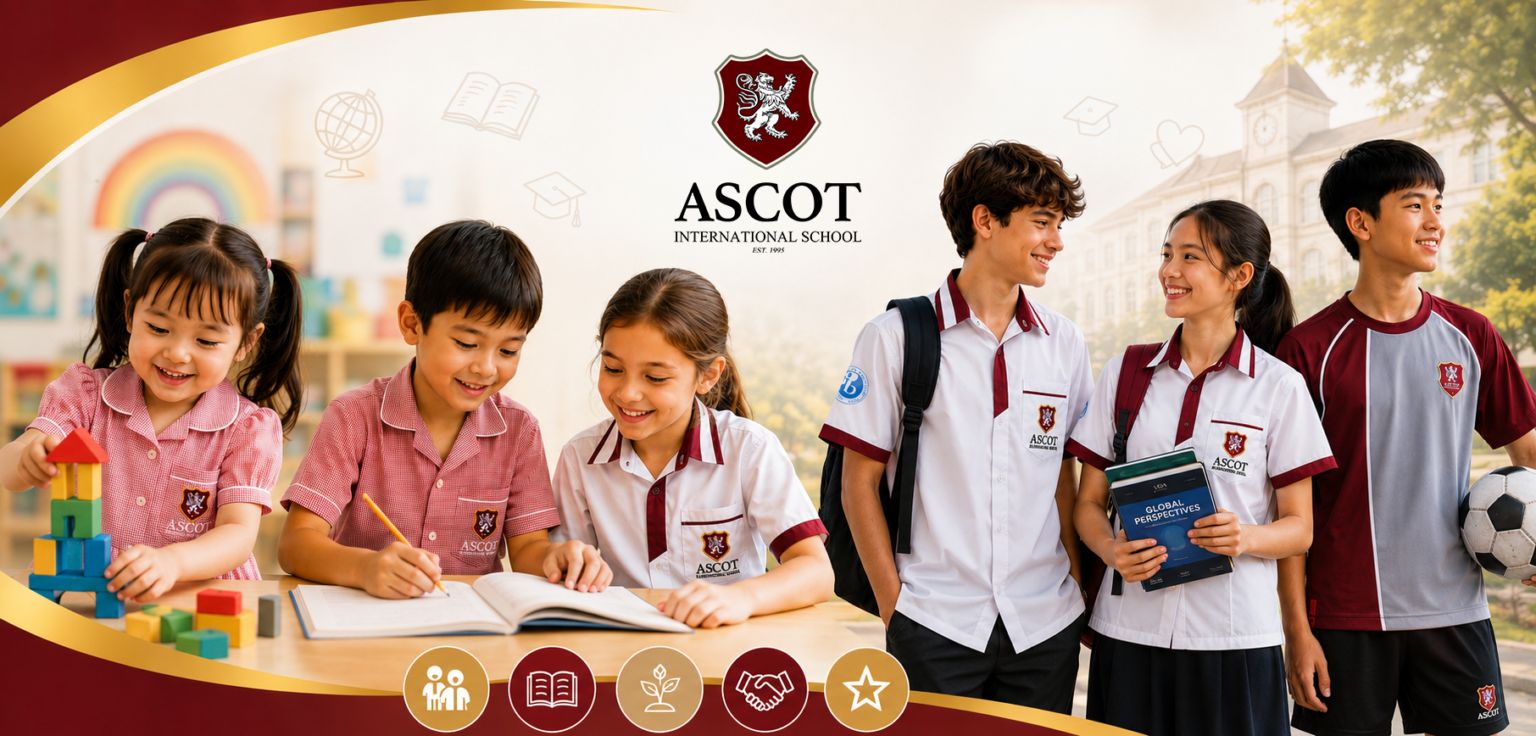
At Ascot International School, we are committed to supporting the whole child and ensuring that every student is able to thrive academically, socially, emotionally, and personally. We recognise that each student is unique, bringing different strengths, experiences, interests, languages, and learning needs to our community.
Our approach to student support is built on the belief that all students can succeed when they are known, valued, challenged, and supported in an inclusive and caring environment.
Student wellbeing and achievement are at the heart of everything we do. Through strong partnerships between students, families, teachers, and specialist support staff, we provide a comprehensive network of support designed to help students overcome challenges, develop confidence, build resilience, and achieve their full potential. Whether a student requires support with language acquisition, learning needs, social and emotional wellbeing, or future university and career planning, our dedicated teams work collaboratively to ensure that every learner is equipped
with the skills, knowledge, and support needed to flourish both in school and beyond.
To achieve this, Ascot provides a range of specialist support services, including:
Together, these services contribute to a holistic approach that promotes student success, wellbeing, belonging, and readiness for future pathways in an increasingly interconnected world.
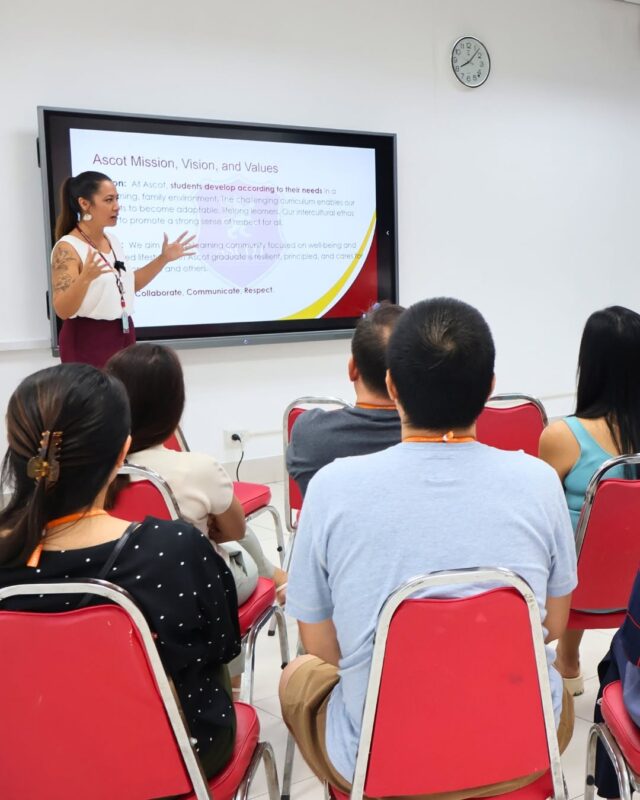
At Ascot, we believe every student brings rich linguistic and cultural knowledge to our school. Our EAL program exists not to “fix” a deficit, but to help students leverage their full language repertoire to thrive in an academic setting.
EAL support at Ascot is tailored to the developmental, linguistic, and academic needs of students across age groups. The level and type of support evolve across phases of the school, reflecting our belief in both early identification and responsive, just-in-time instruction.
| School Phase | Support Model | Details |
|---|---|---|
|
Early Years (EY1–EY3) |
Consultation Model | Teachers receive guidance from EAL specialists. Language development is embedded in play, routines, and early literacy. |
| Year 1 | Consultation Model (with WIDA Check-In in Term 3) | Students are not formally enrolled in EAL, but language needs are observed, and WIDA is used to inform future placements. |
| Year 2 | Transition Year – Monitoring, Consultation, (Paid) Direct Support (Term 1.2) | Teachers implement EAL strategies with guidance. Mid-year, WIDA and referrals inform optional support, leading into Year 3 requirements. |
| Years 3–13 | Required Paid EAL Support Service | Based on WIDA data and classroom observations, students receive structured support, documented via ILPs and communicated to families. |
This staged model ensures support begins with observation and responsive strategies, gradually shifting to formal service and documentation when appropriate.
Support takes many forms:
This flexible approach reflects WIDA’s emphasis on “language development in service of content learning”students are learning English through curriculum, not in isolation from it.
At Ascot International School, we embrace the International Baccalaureate’s fundamental belief that every learner is unique, capable, and entitled to a high-quality education that honours their individuality whilst fostering their growth within our global community.
We believe that inclusion is not merely the presence of diverse learners in our classrooms, but the active celebration and support of all students’ potential. True inclusion means removing barriers to learning, challenging assumptions, and ensuring that every individual has equitable access to meaningful educational experiences.
Our commitments:
There are four common barriers to learning:
Learning Support at Ascot is tailored to the developmental, linguistic, and academic needs of students across age groups. The level and type of support will vary based on the needs of the child, taking into account the overall, long-term wellbeing of the child.
| Support Model | Details |
|---|---|
| Consultation Model (Tier 1) |
Quality first teaching by classroom teachers Teachers receive guidance from Learning Support specialists. Differentiated content and targeted skills instruction is embedded in play, routines, and early literacy. |
| Small-group or 1-to-1 targeted interventions (Tier 2) |
By Learning Support staff Short-term (one month to one Academic Year), pull-out interventions targeting specific skills. Under 3 hours per week. |
| Part-time Integration Aide support (Tier 3) |
By a school-based Integration Aide Long-term (minimum one Academic Year) 1-to-1 push-in support for specific classes or situations during the school week. Between 4 to 14 hours per week. Requires additional fees based on the amount of support. |
| Full-time Integration Aide support (Tier 3) |
By a school-based Integration Aide Long-term (minimum one Academic Year) 1-to-1 push-in support for the majority of classes. Between 14 to 25 hours per week depending on student needs. Requires additional fees. |
Tier 1: Universal Support
Tier 2: Targeted Support
Tier 3: Individualised Support
ILP updated each term and co-created with teachers and parents
At Ascot, we believe that a student’s wellbeing is central to their learning. Our counselling services are designed to create a safe, inclusive, and supportive environment where every child can thrive. We view each student as an individual with unique strengths, needs, and potential.
The Ascot Counselling Program aligns with the school’s mission to provide a welcoming, family environment where students develop according to their needs and become adaptable lifelong learners. Our work supports Ascot’s vision of nurturing resilient, principled individuals who value balance, wellbeing, and care for others and the environment.
Guided by Ascot’s core values, Collaborate, Communicate, Respect, the counselling program promotes empathy, inclusion, and open dialogue within a diverse international community. Counsellors encourage students to understand themselves and others, develop respectful relationships, and appreciate the intercultural ethos that defines Ascot.
Our program is informed by the International School Counselor Association (ISCA) Student Standards (2022), which outline the knowledge, attitudes, and skills students need to thrive academically, socially, and personally. These standards are organised into four domains: